

Feeling wired but tired? Battling fatigue that keeps getting in the way of YOUR day? Those symptoms deserve attention—but they don’t tell us on their own that your adrenal glands are the problem.
Let’s start with the whole picture: your sleep, stress, medications, health history and how long you’ve been feeling this way. Fatigue can have many causes. A careful evaluation helps us decide what to investigate rather than jumping straight to a label.
What Do Your Adrenal Glands Do?
Your adrenal glands sit above your kidneys and produce hormones involved in stress responses, blood pressure and other functions. Conditions such as adrenal insufficiency are recognized medical disorders that need appropriate testing and treatment.
What About “Adrenal Fatigue”?
You may have heard this term used for exhaustion after ongoing stress. The Endocrine Society explains that “adrenal fatigue” is not a scientifically established medical condition, and there is no validated test for it. That does not mean YOUR symptoms are imaginary. It means we need to look for an explanation that can guide appropriate care.

Your Hormones Work Together—Symptoms Still Need Evaluation
Think of your hormones as a team. Thyroid function, reproductive health and stress responses can influence how you feel. But it’s too simple to say one organ “picks up the slack” until another wears out.
Fatigue, brain fog, sleep changes, bowel changes and irregular periods can overlap across many conditions. A symptom list cannot diagnose an adrenal, thyroid or hormone disorder.
Bring the Pattern, Not Just the Label
Note when your symptoms started, whether they change around your cycle, how you’re sleeping and what has changed in your medications or routine. Bring previous test results too. This gives us a useful starting point for deciding whether thyroid evaluation, women’s hormone care or another next step is appropriate.

Build a Foundation for YOUR Well-Being
Everyday routines can support your overall health while you investigate persistent fatigue. They are not a substitute for evaluating an underlying condition.
Sleep
Make room for a regular sleep routine and tell your provider about snoring, disrupted sleep or ongoing daytime sleepiness. Explore our winter sleep article for ideas to discuss.
Stress and Support
Identify the stressors you can change and the support you need for those you can’t. Gentle movement, relaxation practices and time with supportive people may fit your plan. Read our everyday stress strategies.
Nutrition
A varied eating pattern and regular meals can help meet your nutritional needs. Bring questions about appetite changes, restrictions or supplements to your visit. Fatigue alone is not a reason to increase salt or begin an “adrenal support” supplement.
Nutrients
Magnesium, vitamin C and B vitamins have roles in the body, but taking more does not establish or treat an adrenal diagnosis. Discuss whether your history or diet suggests a deficiency, whether testing is useful and whether supplementation is appropriate for YOU.
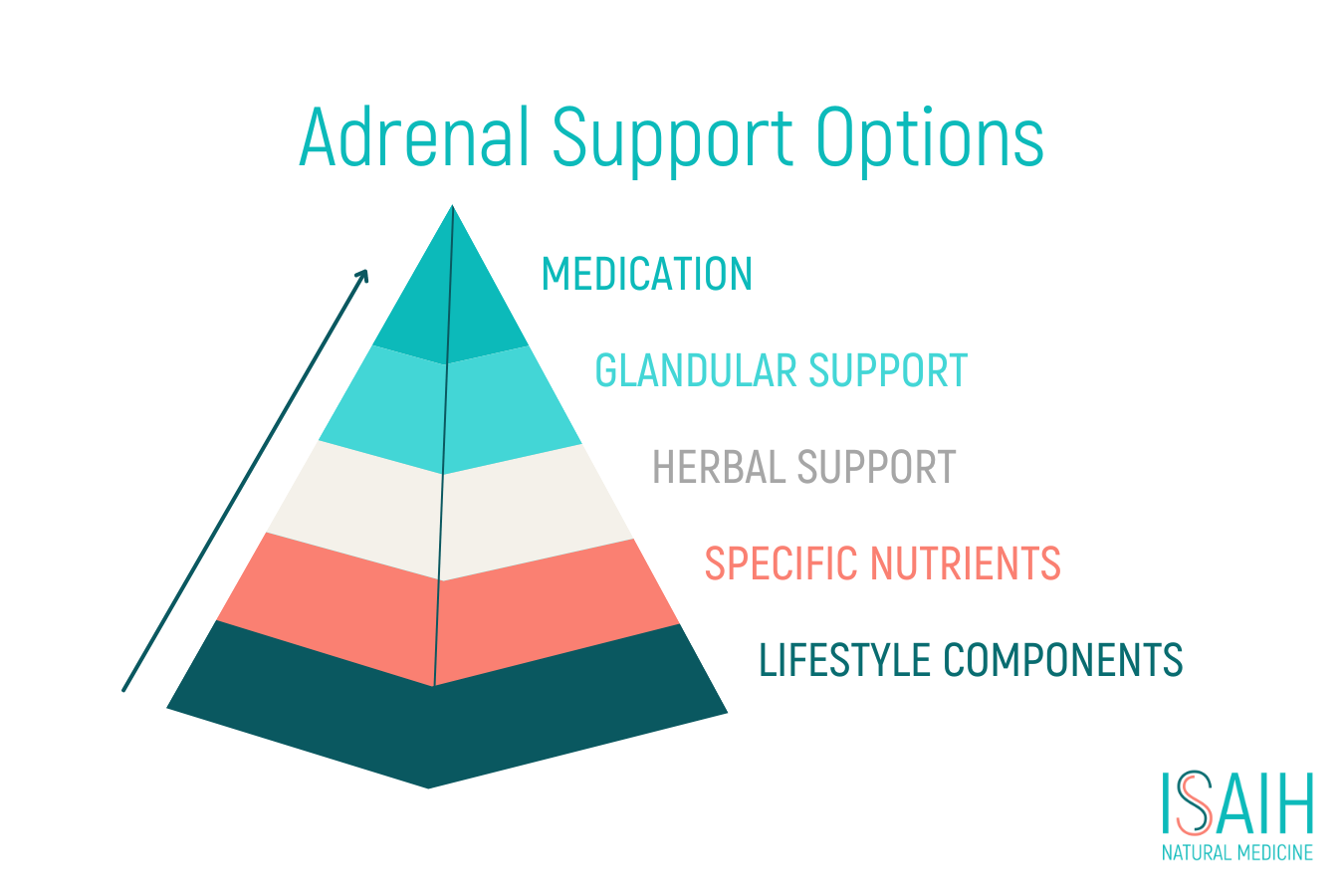
Ask Before Adding Herbs, Glandular Products or Medication
“Natural” does not automatically mean a product is appropriate for YOUR situation. Herbs and supplements can interact with medications and have side effects. Discuss the specific product, dose and reason for using it with a qualified clinician.
Adrenal glandular products are not an established treatment for an “adrenal fatigue” diagnosis. Do not use them to replace an evaluation or prescribed care.
Diagnosed adrenal insufficiency may require ongoing hormone replacement. Do not stop or change prescribed steroids or other medications on your own. Your treating clinician can explain the risks, monitoring and duration appropriate to your diagnosis.

Let’s Take Your Fatigue Seriously
Listen to your body—and bring the details. If fatigue is persistent, new or interfering with daily life, discuss it with a healthcare professional. We want to understand YOUR whole health picture and decide what evaluation makes sense.
At ISAIH Natural Medicine in Boise, you can learn how to become a patient and discuss your concerns with our team.
Further reading: Endocrine Society: Adrenal Fatigue.